
Home » Terpene-Infused Herbal Wraps and Cones » Jack Herer Terpenes
Showing all 6 results
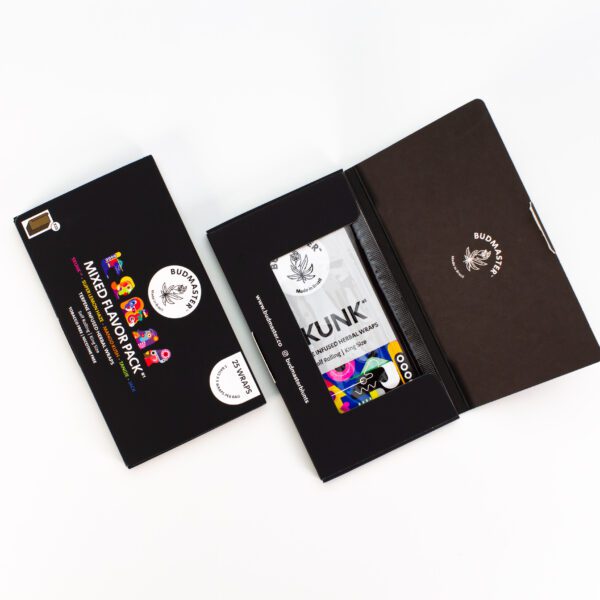
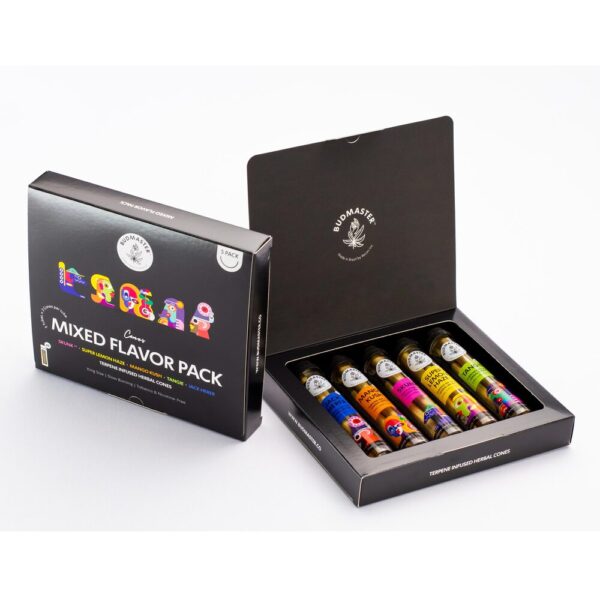
All Budmaster premium pre-rolled blunt cones feature natural, high-quality terpenes, natural chamomile paper, and gorgeous packaging. Just choose your favorite flavor and decide between a five-pack box (10 blunt cones total) or a display box which showcases 12 tubes (24 blunt cones total).
Most consumer-facing strain references converge on terpinolene as the lead terpene, followed by a combination of caryophyllene and pinene as prominent supporting players – an arrangement that maps neatly onto the “fresh/herbal + spice + pine” sensory shorthand.
That said, it’s normal to notice “citrus” even when limonene isn’t listed as dominant, because aroma perception is holistic; blends designed to emulate Jack often include limonene among the important constituents that help push that citrus edge forward.
“Terpenes” are a large class of naturally occurring compounds found widely in nature, including many plants, and they’re a major reason botanicals (and cannabis cultivars) smell and taste the way they do. In cannabis specifically, terpenes are commonly described as key contributors to strain-distinct aroma and taste – the reason one cultivar leans “piney” while another reads “citrus” or “spice.”
For the Jack Herer terpenes aroma, the goal is not just a “nice smell” but a recognizable signature: a crisp, forest-like top note with bright spice and citrus accents, often summarized as “pine + spice + citrus.” That shorthand matches how major strain databases describe Jack Herer’s sensory identity (e.g., pine/woody/earthy with citrus/spice in the mix).
The most consistently cited “dominant” terpene for Jack Herer in mainstream strain databases is terpinolene, with caryophyllene and pinene frequently listed right behind it among the most abundant.
It’s also important to understand what “dominant” means in the real world: cannabis chemistry can vary by phenotype, cultivation conditions, harvest timing, drying/curing, and storage – so the top terpene trio may be stable as a theme, while the exact ratios can shift.
Post-harvest handling is especially relevant because many terpenes are volatile and can decline during drying/curing and longer storage windows.
Terpinolene is especially useful to understand because it’s not the most common dominant terpene in cannabis – one reason strains where it leads can feel “distinct.”
Leafly notes that terpinolene-dominant cultivars are comparatively uncommon (roughly “one in ten” is the rule-of-thumb they publish), which helps explain why the Jack aroma reads as crisp and recognizable to many consumers.
Outside cannabis, terpinolene is also found naturally in other plants, and chemical suppliers describe it as a volatile compound occurring in botanicals such as sage, rosemary, and carrot – useful context for understanding how “botanical terpenes” can recreate a Jack-like aroma without using cannabis-derived ingredients.
The “pine + spice + citrus” description is not random – it’s a sensory summary of how multiple terpenes stack together. Pinene-linked “wood/resin” notes, caryophyllene-linked “spice/pepper” notes, and terpinolene-linked “fresh/herbal/citrus-leaning” notes can combine into a layered aromatic impression that many people immediately label as “classic Jack.”
Citrus specifically is often associated with terpenes like limonene, which is widely described as citrus-like in non-cannabis contexts. Some Jack Herer terpene blend listings (designed to mimic the Jack profile) also feature limonene among the “major” or supporting components—another reason citrus often appears in Jack-style flavor descriptions even when terpinolene is described as the primary terpene.
In practice, “pine” often reads as a blend of resinous-forest notes rather than one ingredient. Cannabis references describe pinene as a pine-associated terpene, and other terpene discussions highlight that terpinolene can add herbal/piney nuances when present with pinene, creating a more dimensional forest character.
This is why the same strain name can feel more “bright pine” in one batch and more “earthy wood” in another: small shifts in terpene ratios can change how your nose interprets the whole bouquet.
Terpenes are volatile by nature, and multiple peer‑reviewed studies and reviews discuss that drying/curing and long storage can reduce terpene content, with monoterpenes often being more vulnerable than certain sesquiterpenes.
That matters for “flavor products,” too. If what you love is the crisp Jack-style nose, freshness and packaging aren’t just cosmetic – they help preserve the aromatic experience you’re actually buying.
Terpenes exist widely across plants (and are major constituents of essential oils), so flavor “terpene profiles” can be created using botanical sources without relying on cannabis-derived extraction. From a chemistry standpoint, the same terpene molecule can occur in multiple plants; what changes is the source and how it’s formulation-controlled.
On the BUDMASTER Jack Herer terpenes category page and on the Jack product listings themselves, the company explicitly states two key points relevant to shoppers: the wraps/cones are chamomile‑based, nicotine‑free, and tobacco‑free, and the products do not contain cannabis. Budmaster’s terpenes are described as botanical and not cannabis-derived.
Because terpene perception is sensitive to volatility and degradation, quality comes down to a few practical factors:
Choose the format that matches your routine: wraps if you want the “roll-your-own” ritual and a larger surface area that can carry aroma, or cones if you want convenience and consistency with quick pack-and-go sessions.
On the Jack Herer terpenes category page, BUDMASTER lists multiple Jack options across both formats, all positioned as chamomile-based, tobacco-free, and nicotine-free.
In the Jack lineup specifically, the product descriptions emphasize a “spicy, pine-scented” Jack character paired with slow-burning performance and freshness-focused packaging.
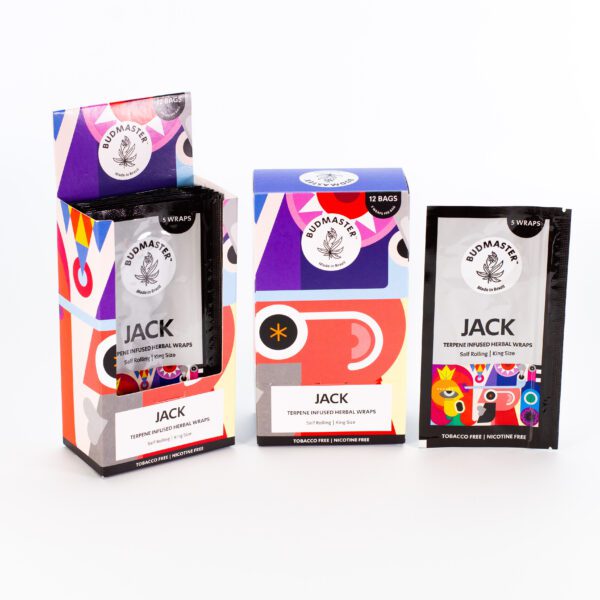
If your priority is hands-on control, wraps make sense: BUDMASTER describes its Jack wraps as easy-to-fill and self-rolling, built for a longer session style while staying tobacco- and nicotine-free.
If your priority is consistency and speed, cones are the practical choice: BUDMASTER describes its Jack cones as ready-to-fill and shipped in airtight glass tubes for freshness – useful if you want a more repeatable experience and less time rolling.
Many widely used strain references explicitly list terpinolene as the most abundant terpene in Jack Herer, with caryophyllene and pinene close behind.
Consistency is a “theme,” not a guarantee. Published research on cannabis post-harvest handling shows terpene retention can change based on drying, curing, and storage, meaning two products with the same strain name may still smell slightly different depending on handling and age.
Two principles matter: keep them sealed and keep them away from heat/light as much as possible. Scientific literature on cannabis quality repeatedly emphasizes terpene volatility and terpene loss during post-harvest steps and storage; even without getting into advanced chemistry, the practical takeaway is “air + time + heat/light = weaker aroma.”
That’s also why packaging choices on the Jack product pages are meaningful: resealable inner bags for wraps and airtight glass tubes for cones are both explicitly positioned as freshness-preserving.
No products in the cart.